










Best Dehumidifier for a Room With No Windows: Windowless Bedrooms, Internal Bathrooms and Walk-in Wardrobes in the UAE
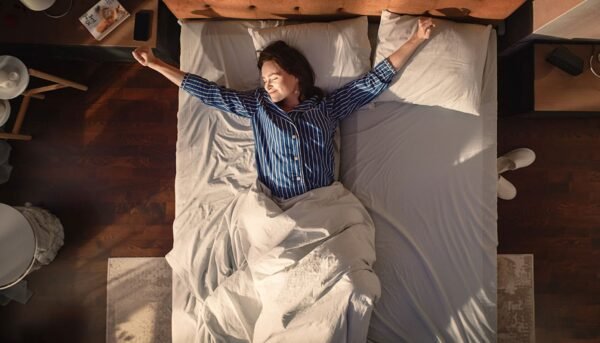
Many UAE homes have at least one room with no window: an internal bathroom, a walk-in wardrobe, a maid's room or storeroom in a villa, or a converted bedroom in an apartment. These rooms are often the first to smell musty, because moisture has nowhere to go and the air-conditioning may barely reach them. A dehumidifier can solve that, but not in every case, and not in every position. This guide explains how to tell whether the problem really is humidity, what a dehumidifier can and cannot do in a closed room, where the manufacturer's manuals allow one to stand, and which size makes sense.
The short answer
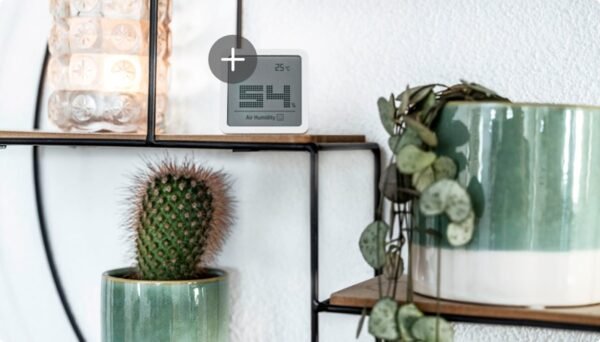
- Measure first. A digital hygrometer that reads above about 60% relative humidity for several days means the room needs moisture removal. The US EPA advises keeping indoor humidity below 60%, ideally 30 to 50%.
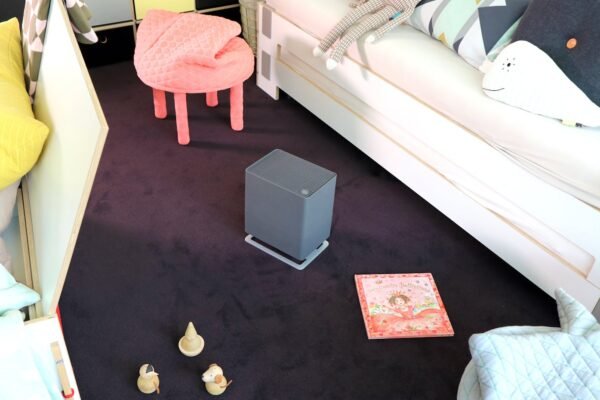
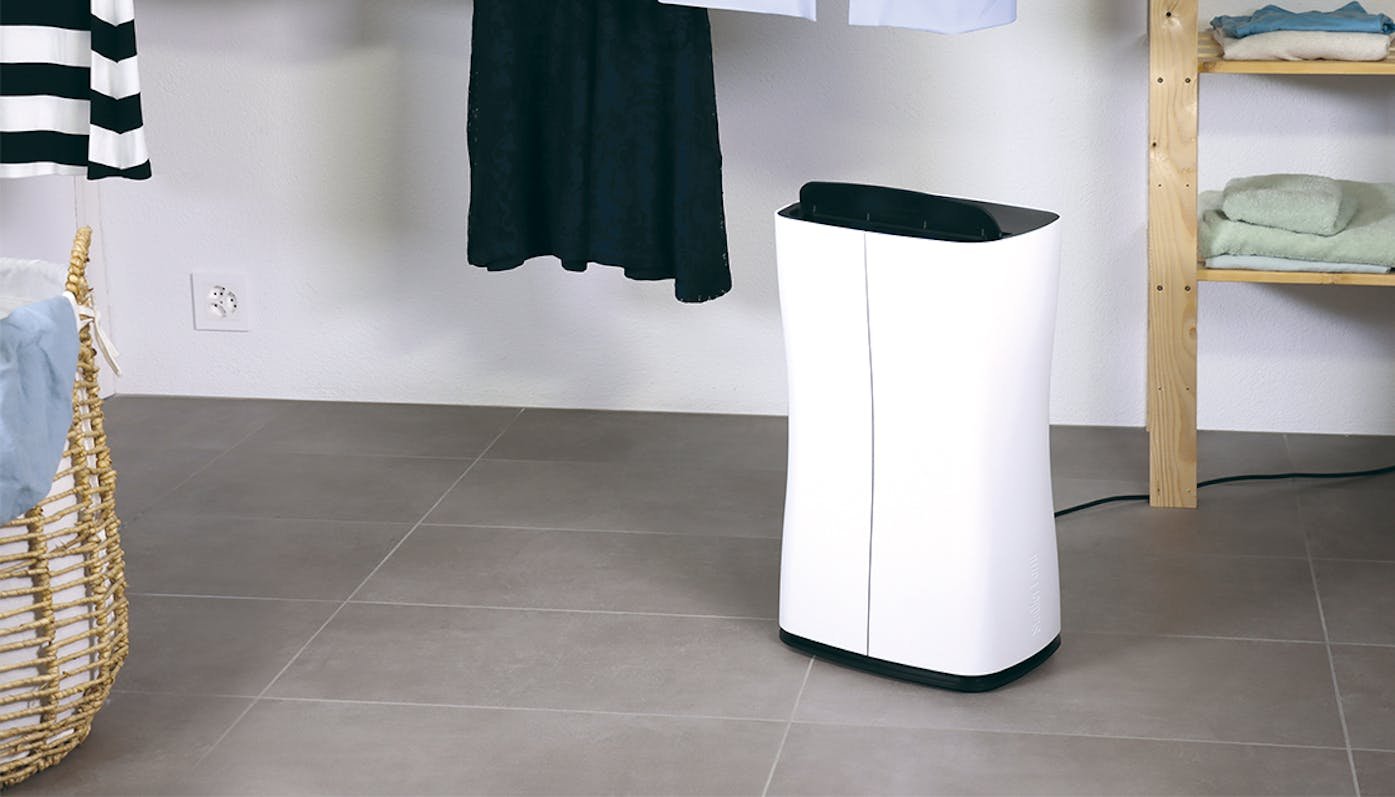
- For a windowless bedroom, maid's room or storeroom of up to about 40 m², a compact compressor dehumidifier such as Theo (10 litres per day) is usually enough. Choose Albert instead if someone sleeps in the room and noise matters.
- For an internal bathroom, the right tool is usually a working extractor fan, not a portable dehumidifier. Stadler Form's manuals require 3 metres between Theo, Lukas or Lukas Pro and any bath or shower, which most UAE bathrooms cannot provide.
- For a walk-in wardrobe, a dehumidifier can stand in the dressing room itself with the door open and clear space around it, but never inside a closed wardrobe or cupboard.
- A dehumidifier does not ventilate. It removes water vapour from the air already in the room. It does not bring in fresh air or lower carbon dioxide.
Why rooms without windows get humid, and how to check
A window is not what removes moisture from a room in the UAE; for most of the year it stays shut anyway. What a windowless room lacks is a way for moist air to leave and drier air to arrive. Moisture comes in from showers, laundry drying on a rack, cooking nearby, people breathing overnight, and humid outdoor air leaking in around doors, shafts and service openings. If the room has no extract fan, a weak AC supply or a door that stays closed, that moisture stays.
Air-conditioning makes the picture more complicated. A split unit or a ducted system dries the air while its compressor runs, but a small room on a shared thermostat, or a room where the AC is switched off, can sit warm and damp while the rest of the home feels fine. Our guide Does air conditioning remove humidity? explains why.
How to check properly: put a digital hygrometer at about chest height, away from the door and any vent, and note the reading morning and evening for a week. Readings that keep returning above 60%, condensation on cold surfaces, a musty smell when you open the door, or clothes that never feel completely dry all point to excess humidity. Our guide to measuring humidity covers what the numbers mean.
Dehumidifier, ventilation or AC: which fix suits which situation
A dehumidifier, an extractor fan and air-conditioning solve different problems. Use the table to match the fix to what you actually see.
| What you see in the windowless room | Most likely cause | Right first step |
|---|---|---|
| Hygrometer above 60% for days, musty smell, no visible leak | Moisture builds up faster than it is removed | A dehumidifier sized to the room, run on its humidistat |
| Bathroom mirror and walls stay wet long after a shower | No or weak extraction | Repair or upgrade the extractor fan and run it during and after every shower |
| Stuffy air, headaches or poor sleep with the door closed, humidity normal | Too little fresh air, rising CO₂ | Ventilation: a fresh-air supply, a door undercut or opening the door; a dehumidifier will not help |
| A damp patch that grows, or wet spots after a neighbour showers | Water leak from a pipe, drain or the unit above | Plumber, landlord or building management before anything else |
| Musty smell that starts when the AC runs | Dirty coil, drain pan or condensate line | AC cleaning and service |
| Room is humid only when the AC is off or the door is shut | The room is cut off from conditioned air | Keep the door open or the AC running on a schedule; add a dehumidifier if it is still above 60% |
The fresh-air point matters in a windowless bedroom. A dehumidifier recirculates the same air; it does not dilute the carbon dioxide people breathe out overnight. HawaQ, our group's indoor air quality company, explains this in its guide to stuffy bedrooms and CO₂. If the smell appears only when the AC runs, see HawaQ's guide to an AC that smells musty.
Where the manuals allow a dehumidifier to stand
Every Stadler Form dehumidifier sold in the UAE is a compressor unit, and the manuals set clear placement rules, and they matter more in small rooms than anywhere else. The table summarises the English instructions in each model's current EU manual.
| Rule from the manual | Theo | Albert | Lukas | Lukas Pro |
|---|---|---|---|---|
| Do not operate inside a closet or other closed area | Yes | Keep air intake and outlet open; not behind curtains or other obstacles | Yes | Yes |
| Minimum room floor area | Not stated | Not stated | 4 m² | 7.2 m² |
| Clear space around the unit | Do not cover it; keep the air outlet flap open | At least 50 cm from other objects | More than 50 cm from walls and large objects | More than 50 cm from walls and large objects |
| Distance from bath, shower or pool | At least 3 m, out of reach of a person in the bath | Not near a bath or shower; at least 60 cm from wet areas such as washbasins and 120 cm from a water tap | At least 3 m, out of reach of a person in the bath | At least 3 m, out of reach of a person in the bath |
| Operating range | Optimal 13 to 35 °C; lowest recommended 10 °C | Optimal 13 to 35 °C; lowest recommended 5 °C | Optimal 13 to 35 °C; lowest recommended 5 °C | Optimal 13 to 35 °C; lowest recommended 5 °C |
All four manuals also say to stand the unit on a firm, level, waterproof surface, to plug it straight into a wall socket rather than an extension lead or multi-plug, and to keep the end of a drain hose lower than the outlet. Albert's manual adds that it is designed for private use in the home, not for commercial premises.
A windowless bedroom, maid's room or storeroom
This is where a dehumidifier works best. Stand it in the open part of the room with the clearances above, set the humidistat to 50 or 60%, and keep the door closed while it runs so it is drying this room rather than the corridor. Check the hygrometer after a few days: once the room holds below 60%, the humidistat will switch the compressor off for longer periods by itself.
Two things are easy to miss in a small closed room. First, a dehumidifier warms the room. All the electricity it uses ends up as heat, and condensing water vapour releases more, roughly 0.7 kWh for every litre collected. In a storeroom with no cooling the temperature will rise; in an air-conditioned room the AC removes that heat. Second, if the room is a bedroom, noise matters more than capacity: see our guide to quiet dehumidifiers for bedrooms.
An internal bathroom
An internal bathroom produces most of its moisture in short bursts during showers. That is exactly the job an extractor fan is designed for: it pulls the wet air out while it is being created. ASHRAE Standard 62.2, the residential ventilation standard used in the United States, asks for bathroom extraction of at least 50 cubic feet per minute (about 25 litres per second) when the fan runs on demand, or 20 cfm (about 10 L/s) when it runs continuously. Many UAE bathroom fans are noisy but move little air because of blocked grilles or long ducts. A simple test: hold a sheet of toilet paper against the grille with the fan on. If it is not held there, the fan needs cleaning or repair, which in a rented home is usually the landlord's or building management's job.
A portable dehumidifier is a poor fit inside most bathrooms. Theo, Lukas and Lukas Pro must stand at least 3 metres from a bath or shower, and Albert needs 60 cm from wet areas such as washbasins and 120 cm from a tap. Few internal bathrooms have that much space. What works instead: run the extractor fan during the shower and until the mirror clears, then leave the bathroom door open and let a dehumidifier in the adjoining bedroom or dressing room dry the air that drifts out, with the unit well away from the doorway and any water.
A walk-in wardrobe or built-in wardrobes
Clothes, shoes and bags stored in a closed space slowly take on whatever humidity surrounds them. The fix is to dry the air around the wardrobe, not to shut a machine inside it. Theo, Lukas and Lukas Pro must not be operated inside a closet or other closed area, and Albert needs its air intake and outlet kept clear with 50 cm of space around it.
- A walk-in wardrobe or dressing room that is a room in its own right can take a dehumidifier on the open floor, with the clearances respected and the door left open or louvred. Check the floor area against the manual: Lukas needs a room of at least 4 m² and Lukas Pro at least 7.2 m².
- Built-in wardrobes in a bedroom: run the dehumidifier in the bedroom, leave the wardrobe doors slightly open for a few hours a week, and do not pack clothes tightly against an outside wall.
- Moisture-absorber tubs and hanging bags are fine as a supplement inside a cupboard, but they hold far less water than a compressor dehumidifier collects in a day and need replacing when full. They do not dry the room.
How to size a dehumidifier for a small enclosed room
Room area is a starting point, not the answer. Stadler Form rates Theo for rooms up to 40 m² (100 m³) and Albert and Lukas for up to 70 m² (175 m³), but the moisture load decides how hard the unit has to work: a bathroom next door, laundry dried in the room, a ground floor or a coastal building all add water that the floor area does not show.
The litres-per-day figure on the box is a maximum. Stadler Form's manuals state that the specified dehumidifying performance is only reached at room temperatures from about 22 °C and humidity from about 70%. An air-conditioned room at 23 °C and 60% is below that point, so any compressor dehumidifier will remove noticeably less water there than its label suggests. That is normal, and it is why a 10-litre model is often plenty for a small closed room that already gets some cooling.
A practical check after the first week (a rule of thumb, not a standard):
- The tank fills every day or two and the room holds below 60%: the size is right.
- The unit runs all the time and the room never gets below 60%: the moisture load is higher than the unit can handle, or there is a source to find first, such as a leak or a shower with no extraction.
- The tank barely collects water and the room reads below 50%: the room did not need dehumidifying, or only needs it in summer.
For a room you cannot visit every day, such as a storeroom or a maid's room in a villa, use continuous drainage. Every model comes with a hose (Albert's is 200 cm, the others 100 cm); route it to a floor drain, keeping the end lower than the outlet so the water runs off by gravity.
What it costs to run
An illustrative calculation, using DEWA's residential slab tariff of 23 to 38 fils per kWh, the fuel surcharge of 6 fils per kWh published for October 2026 and 5% VAT. It assumes eight hours of compressor running a day for 30 days at the power figure in each manual; in practice the humidistat switches the compressor off once the room is dry, so real costs are usually lower.
| Model and rated power | Energy, 8 h a day for 30 days | Approximate monthly cost (lowest to highest slab) |
|---|---|---|
| Theo, 280 W | 67 kWh | AED 20 to 31 |
| Albert, 270 W | 65 kWh | AED 20 to 30 |
| Lukas, 260 W | 62 kWh | AED 19 to 29 |
| Lukas Pro, 545 W | 131 kWh | AED 40 to 60 |
Which Stadler Form dehumidifier suits a room with no windows
Specifications below are from each model's technical data and manual; prices are as listed on stadlerform.ae on 2 November 2026.
| Theo | Albert | Lukas | Lukas Pro | |
|---|---|---|---|---|
| Maximum extraction | 10 L/day | 20 L/day | 20 L/day | 50 L/day |
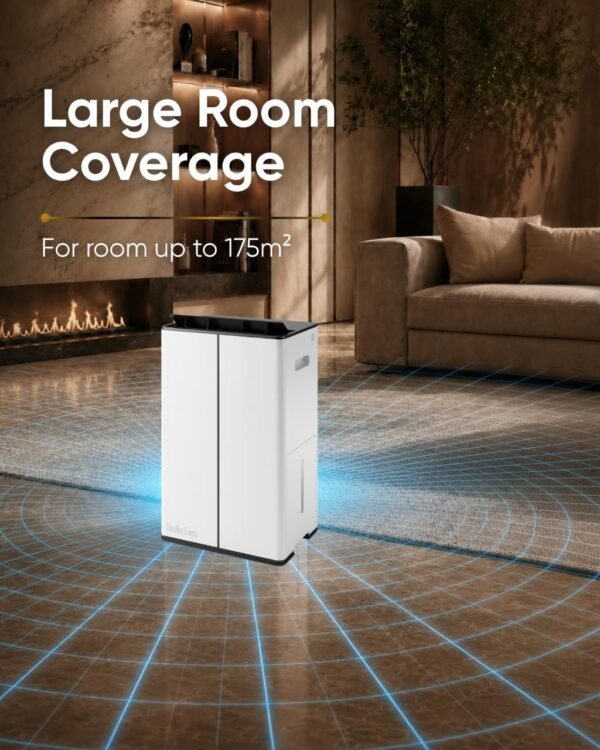
| Rated room size | 40 m² / 100 m³ | 70 m² / 175 m³ | 70 m² / 175 m³ | 175 m² / 435 m³ |
| Noise | 42 dB(A) | 33 to 44 dB(A) | 38 to 52 dB(A) | 38 to 55 dB(A) |
| Humidistat | 40, 50 or 60% or continuous | 30 to 80% or continuous | 30 to 80% or continuous | 30 to 80% or continuous |
| Tank | 2.1 L | 4.6 L | 4.2 L | 5.2 L |
| Weight | 11.4 kg | 13.3 kg | 15.8 kg | 18 kg |
| Extras | Timer, auto defrost | Night mode, timer, swing | Wi-Fi app, laundry mode, swing | Wi-Fi app, HEPA H11 air purifier, laundry mode |
| Price | AED 1,149 | AED 2,219 | AED 2,450 | AED 3,809 |
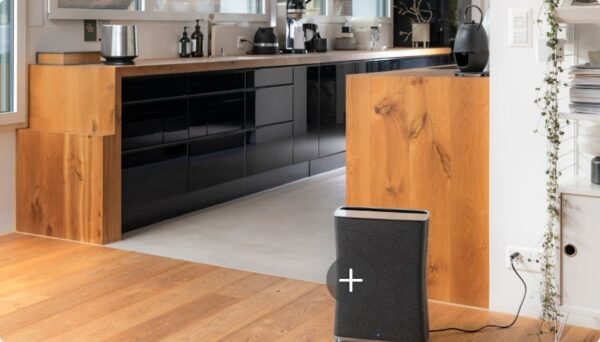
- Theo is enough for most windowless rooms. A maid's room, storeroom, utility room or small windowless bedroom rarely needs more than 10 litres a day, especially with some AC. It is the lightest and least expensive model, and its fixed 40, 50 and 60% settings cover what these rooms need.
- Albert if someone sleeps in the room. It starts at 33 dB(A) with a night mode that dims the display, and its 4.6-litre tank needs emptying less often than Theo's.
- Lukas if you want app control or dry laundry in the room, for example a windowless utility room. Its manual sets a minimum room floor area of 4 m².
- Lukas Pro is usually unnecessary in a single small room. Its 50 litres a day are designed for large living areas and villas, and its manual requires a room of at least 7.2 m². It earns its place only if the windowless room is large, opens onto a bigger humid space, or you also need its HEPA air purifier.
Lukas Pro carries a 5-year warranty and the other models 2 years, with service from Stadler Form UAE's own service centre in Dubai. For the full range, including larger rooms, see the UAE dehumidifier buying guide.
When a dehumidifier is not the answer
- The hygrometer stays below 60% and the smell persists: look for a dry drain trap in a shower or floor drain, a dirty AC filter or rubbish, not humidity.
- A stain grows, paint bubbles, or the wall is wet to the touch in one spot: suspect a leak and call a plumber or your building management.
- Mould keeps coming back on the same wall or ceiling: dry air helps, but the cause has to be fixed and the mould cleaned properly. HawaQ's guide to mould that keeps coming back explains the order of work.
- The room feels stuffy but the humidity is normal: it needs fresh air, not drier air.
Frequently asked questions
Does a dehumidifier work in a room with no windows?
Yes. A dehumidifier does not need a window; it draws room air over a cold coil, condenses the water into its tank or drain hose and returns the drier air to the room. It works best with the door closed so it is drying only that room.
Can I put a dehumidifier inside a wardrobe or closet?
No. The manuals for Theo, Lukas and Lukas Pro say not to operate them inside a closet or other closed area, and Albert needs 50 cm of clear space around it. Put the dehumidifier in the room or dressing area and leave the wardrobe doors slightly open.
Can I use a dehumidifier in a bathroom?
Only if the bathroom is large enough to meet the manual's distances: 3 metres from any bath or shower for Theo, Lukas and Lukas Pro, and for Albert at least 60 cm from wet areas such as basins and 120 cm from a tap. Most internal bathrooms are too small, so use the extractor fan and dry the adjoining room instead.
Does a dehumidifier replace ventilation?
No. It removes moisture but does not bring in outdoor air or lower carbon dioxide. A windowless bedroom still needs a fresh-air supply, an open door or a gap under the door.
Can I run a dehumidifier with the air-conditioning on?
Yes. The two work together: the dehumidifier removes moisture the AC leaves behind, and the AC removes the heat the dehumidifier produces. Expect it to collect less water in a cool room than its maximum rating, because the rated performance is reached only from about 22 °C and 70% humidity.
What humidity should I set in a windowless room?
Set the humidistat to 50 or 60%. The US EPA recommends keeping indoor humidity below 60%, ideally between 30 and 50%, and going much lower in a small room only adds running time.
Need help choosing?
Send us the room's size, whether it has AC or an extractor fan, and a few hygrometer readings, and we will recommend a model or tell you honestly that you need a fan or a repair instead. You can also visit the Stadler Form showroom in Dubai or compare every model on the dehumidifier page.
Sources
- Stadler Form instruction manuals (EU edition, English section): Theo, Albert, Lukas, Lukas Pro.
- US Environmental Protection Agency, A Brief Guide to Mold, Moisture, and Your Home.
- Building America Solution Center (PNNL), Bathroom exhaust, summarising ASHRAE Standard 62.2.
- Dubai Electricity and Water Authority, slab tariff.