












Room Heaters in the UAE: Fan vs Ceramic vs Oil Heater, and Which One to Buy This Winter
UAE homes are built to keep heat out, and from December to February that works against you. Tiled floors, high ceilings, large windows and an air-conditioning system that only cools leave many apartments and villas noticeably cold in the evening and early morning. A room heater fixes that cheaply, as long as you pick the right type for the room and use it safely. This guide compares fan, ceramic and oil heaters on what actually matters here, shows what one costs to run on a Dubai electricity bill, and explains how to size a heater for UAE ceilings.
Key takeaways
- Every electric resistance heater turns practically all the electricity it uses into heat. A fan heater and an oil heater of the same wattage cost the same per hour at full power; the difference is how fast the heat reaches you and how the heater behaves once the room is warm.
- A ceramic (PTC) fan heater warms a room in minutes and suits rooms you use for a few hours, such as a bedroom before sleep, a study or a child's room. An oil-filled radiator is silent but slow, and suits a closed room that needs gentle heat all evening.
- In Dubai, a 2,000 W heater running flat out costs about AED 0.61 to AED 0.92 an hour, depending on your consumption slab. A thermostat brings that down once the room reaches temperature.
- Size by room volume, not just floor area. Stadler Form's room ratings assume a standard ceiling of about 2.5 m, and many UAE rooms are 3 m or higher.
- Do not sleep with a fan heater running, do not use one in a bathroom, and plug it straight into a wall socket.
How cold UAE homes really get
On the coast the winter is mild by any international standard. At Dubai International Airport the 1991 to 2020 climate normals give January an average daily low of 15.3 °C and an average daily high of 24.4 °C, with December and February only slightly warmer. Inland desert areas and the mountains of Ras Al Khaimah and Fujairah get colder at night.
The reason homes feel colder than those numbers suggest is the building. Ceramic and marble floors pull heat from your feet, single-glazed windows radiate cold, and most apartments have no heating at all, only cooling. Many buildings on district cooling supply chilled water only, so the indoor units cannot heat. A room that sits at 19 or 20 °C on a January evening feels cold when you are sitting still on a tiled floor, which is exactly when a small heater earns its place.
Fan, ceramic, oil or AC heat mode: the honest comparison
The table below compares the options most UAE households choose between. Running cost per hour depends only on wattage, so it is not a column: a 2,000 W heater of any type uses 2 kWh in an hour at full power.
| Option | How it heats | Warm-up | Noise | Best for |
|---|---|---|---|---|
| Ceramic (PTC) fan heater | A ceramic element heats air and a fan pushes it into the room | Minutes | Fan noise; Stadler Form models run from about 30 to 52 dB(A) | Bedrooms before sleep, studies, children's rooms, home offices |
| Oil-filled radiator | Heats oil sealed in fins, which warm the air by convection | Slow; the oil has to heat up first | Silent apart from occasional clicks | A closed room that needs gentle heat for many hours |
| Split AC in heat mode | A heat pump moves heat from outdoors to indoors | Minutes | Same as the AC on cooling | Whole rooms, if your unit has a heat mode |
| Patio or infrared heater | Radiant heat that warms people and surfaces directly | Instant | Silent | Balconies, terraces and outdoor seating |
Ceramic and fan heaters are the same family. "Fan heater" describes how the heat is delivered, and "ceramic" or "PTC" describes the element. A PTC element's electrical resistance rises as it gets hotter, so it limits its own surface temperature, which is one reason it is the standard choice for compact heaters used in bedrooms and children's rooms. All three Stadler Form heaters use PTC ceramic elements.
Oil heaters are not more efficient. They feel gentler because they heat slowly and keep radiating after the thermostat cuts out, but per hour at full power they cost exactly the same as a fan heater of the same wattage. They are also heavy and take up floor space.
Check your AC remote before you buy anything. If your split unit has a heat mode (often a sun symbol), it works as a heat pump and typically delivers several units of heat for every unit of electricity, which no resistance heater can match. It warms the whole room evenly. A portable heater still makes sense where the AC cannot heat, where you only need warmth in one spot, or where running a large AC for one person is overkill.
What size heater do you need?
Manufacturers rate heaters by floor area, but heat fills volume. Stadler Form publishes both figures, and the ratio shows the assumption behind them: about 2.5 m of ceiling height.
- Erik: up to 20 m² or 50 m³, 1,500 W
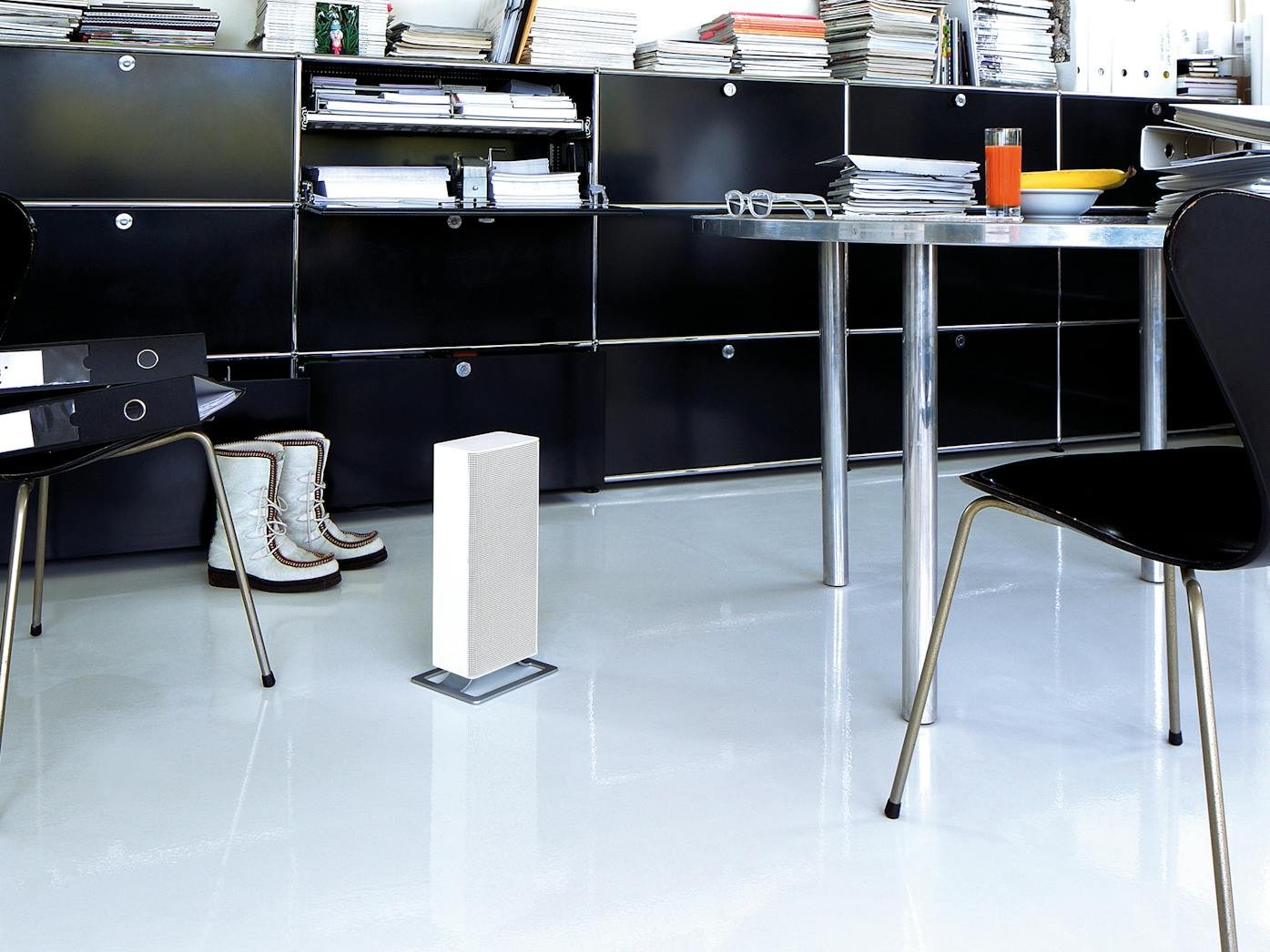
- Anna: up to 25 m² or 63 m³, 1,200 or 2,000 W
- Sam: up to 30 m² or 75 m³, 700 to 2,000 W
To size for your own room, multiply floor area by ceiling height and compare the result with the m³ figure. A 20 m² bedroom with a 3 m ceiling is 60 m³, which is Anna territory rather than Erik's. Large windows, a corner position or a marble floor all argue for stepping up a size. For an open-plan living area much larger than 30 m², one portable heater will warm the part of the room where you sit, not the whole space; that is the case for an AC heat mode or two heaters.
What a heater costs to run in Dubai
DEWA bills electricity in monthly slabs: 23 fils per kWh up to 2,000 kWh, 28 fils up to 4,000, 32 fils up to 6,000 and 38 fils above that. A fuel surcharge is added on every kWh (6 fils in October 2026; DEWA revises it), and 5% VAT applies. Your extra heater consumption is billed at whatever slab your household is in that month, so the effective cost is roughly 30 to 46 fils per kWh including surcharge and VAT.
| Heater at full power | kWh per hour | Cost per hour (lowest to highest slab) |
|---|---|---|
| Erik, 1,500 W | 1.5 | AED 0.46 to 0.69 |
| Anna on low, 1,200 W | 1.2 | AED 0.37 to 0.55 |
| Anna or Sam on high, 2,000 W | 2.0 | AED 0.61 to 0.92 |
As a worked example, a 2,000 W heater on full power for three hours every evening for a month uses 180 kWh, which is about AED 55 to AED 83. In practice the bill is lower: once the room reaches the temperature set on the thermostat, the heater switches off and only cycles back on to hold it. Sam's auto mode adjusts its output across four power levels to reach and hold the set temperature. Sharjah, Abu Dhabi and the northern emirates use different tariffs, so check your own provider's rate per kWh and apply the same arithmetic.
Safety: bedrooms, children and bathrooms
- Warm the room, then switch off before you sleep. Stadler Form's own guidance is that a fan heater must not be left unattended, which is also why it should not be run from a plug-in timer. Heat the bedroom while you get ready, then turn it off.
- Choose tilt and overheat protection for children's rooms. Anna and Sam both switch off if they are knocked over or overheat, which is why Stadler Form describes them as suitable for children's rooms. Keep the heater out of reach and never cover it.
- Leave space around it. Anna needs at least 50 cm from the wall for air circulation, and every heater needs clear space from curtains, bedding and furniture.
- No bathrooms. None of the three is splash-proof, and steam after a shower can cause a short circuit.
- Plug directly into the wall. A 2,000 W heater draws a large current; avoid extension leads and multi-plug adaptors.
- Expect a smell the first time. New heaters often give off a smell for the first few hours of use. It fades by itself.
Do heaters dry the air?
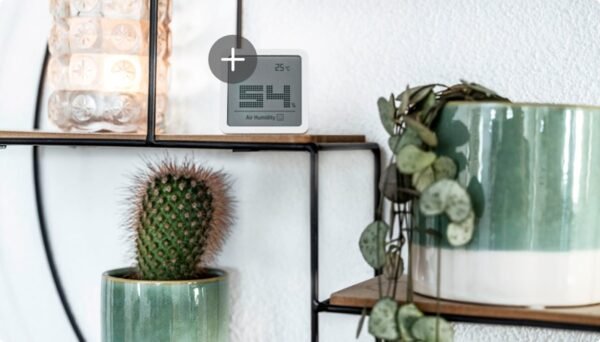
A heater does not remove water from the air, but warming air lowers its relative humidity, because warm air can hold more moisture. A heated bedroom can therefore feel drier, and some people notice it as a dry throat or dry skin in the morning. Many UAE homes are fine because winter air on the coast is not especially dry, but if a hygrometer shows the room well below about 40%, a humidifier in the bedroom solves it. Our guides to dry indoor air in winter and its effects on the body explain what to look for.
Which Stadler Form heater suits which room
All three are Swiss-designed fan heaters with PTC ceramic elements and a thermostat. Prices below are as listed on stadlerform.ae at the time of writing.
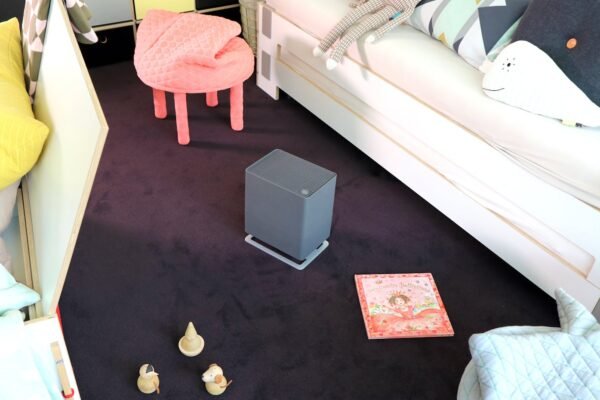
- Anna (AED 495): the bedroom and children's room heater. Two settings, 1,200 and 2,000 W, a stepless thermostat, tilt and overheat protection and under 43 dB(A). Rated for rooms up to 25 m². Compact enough to stand on the floor or a table.
- Sam (AED 649): the smart heater for larger rooms. Four power levels from 700 to 2,000 W, a digital thermostat with auto mode, tilt and overheat protection, and control from the Stadler Form app over WiFi (2.4 GHz networks only). From about 30 dB(A) on its lowest setting, rated for rooms up to 30 m².
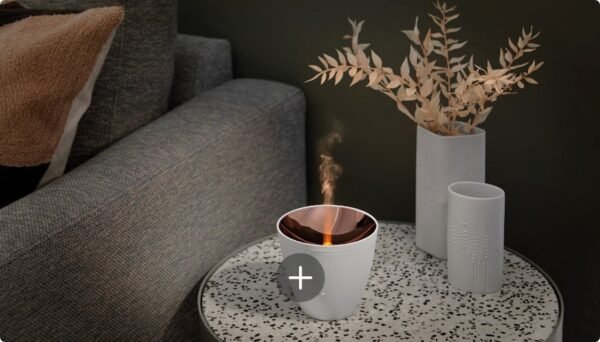
- Erik (AED 585): the living-room heater with a fireplace effect. A fan heater, an electric fireplace and an aroma diffuser in one, usable together or separately. The flames are lit, cold water mist, so they are soot-free and harmless, in four colours or off. Two heat levels up to 1,500 W, a remote control and under 38 dB(A), rated for rooms up to 20 m². Our winter decoration ideas show it in a room setting.
For outdoor seating, a room heater is the wrong tool; see our guide to heating a Dubai balcony.
Frequently asked questions
Which type of heater is best for a bedroom in the UAE?
A ceramic (PTC) fan heater with a thermostat and tilt and overheat protection. It warms a bedroom within minutes while you get ready for bed and can then be switched off. If your split AC has a heat mode, that is the cheapest way to heat the whole room.
Is a fan heater or an oil heater cheaper to run?
Neither. Both are resistance heaters that turn almost all of their electricity into heat, so at the same wattage they cost the same per hour at full power. What differs is speed and behaviour: a fan heater warms the room quickly, while an oil heater warms slowly and keeps radiating for a while after it switches off.
How much does a 2,000 W heater cost to run in Dubai?
About AED 0.61 to AED 0.92 per hour at full power, using DEWA's slab tariff with the October 2026 fuel surcharge of 6 fils per kWh and 5% VAT. Three hours a night for a month is about AED 55 to AED 83, and less once the thermostat starts cycling the heater off.
Is it safe to sleep with a heater on?
Not with a fan heater. Stadler Form's guidance is that a fan heater must not be left unattended, so warm the bedroom before you sleep and then switch it off. A thermostat holds a set temperature, but it is not a reason to leave the heater running all night.
Can I use a heater in a child's room?
Yes, with the right model and placement. Anna and Sam have tilt and overheat protection and Stadler Form describes them as suitable for children's rooms. Keep the heater out of reach, away from bedding and curtains, and switch it off when no adult is in the room.
Do electric heaters dry out the air?
They lower the relative humidity of the air they warm, which can make a closed bedroom feel drier. If a hygrometer reads well below about 40%, a humidifier helps.
Can I use a fan heater in the bathroom?
No. Anna, Sam and Erik are not splash-proof, and high humidity after a shower can cause a short circuit.
What size heater do I need for my room?
Multiply floor area by ceiling height and compare it with the heater's m³ rating: 50 m³ for Erik, 63 m³ for Anna and 75 m³ for Sam. Step up a size for large windows, corner rooms or high ceilings.
Need help choosing?
Tell us the room size, the ceiling height and whether your AC has a heat mode, and we will recommend the right heater, or tell you honestly that you do not need one. Every Stadler Form heater sold on stadlerform.ae comes with free UAE delivery, a 15-day return policy and local warranty support.