
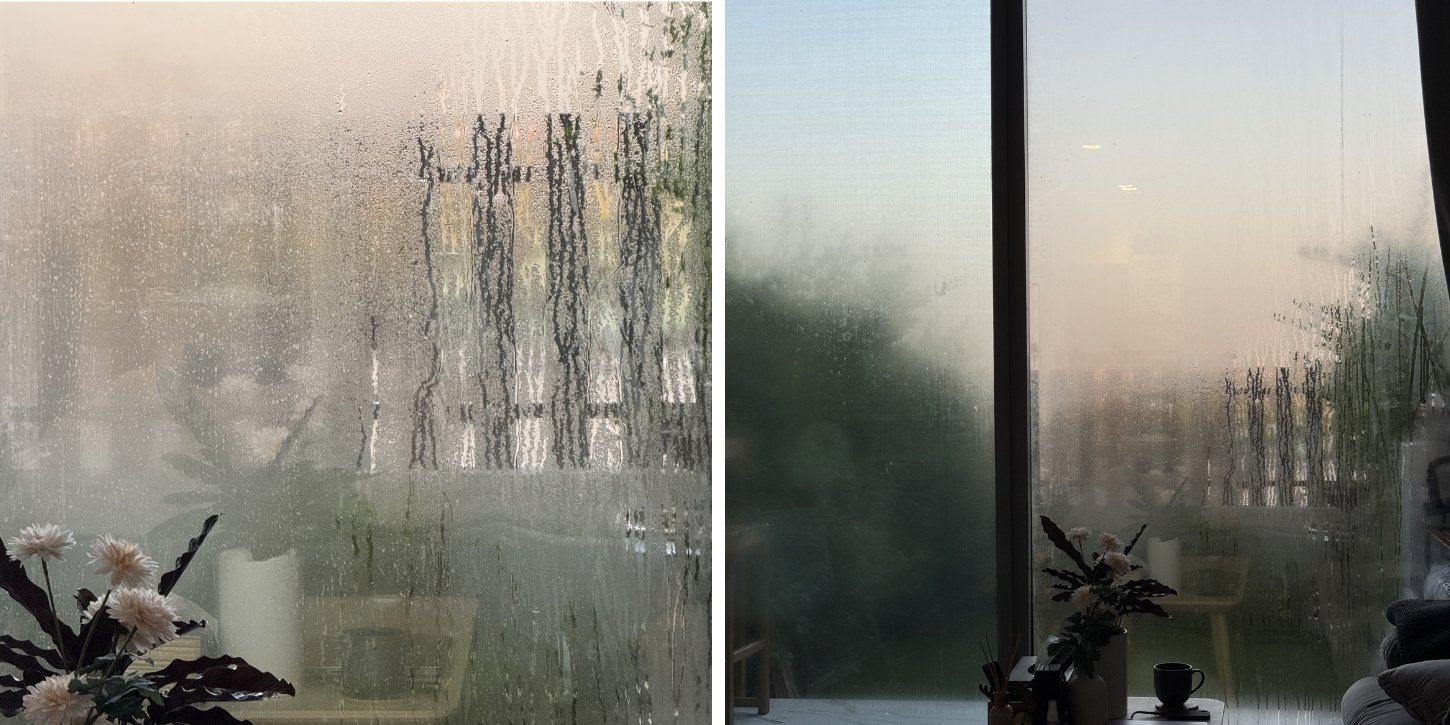
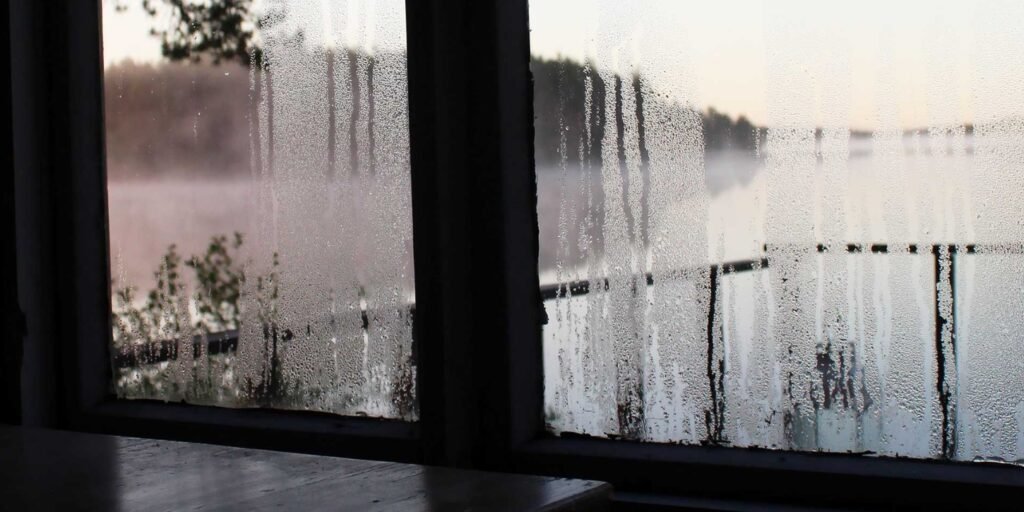


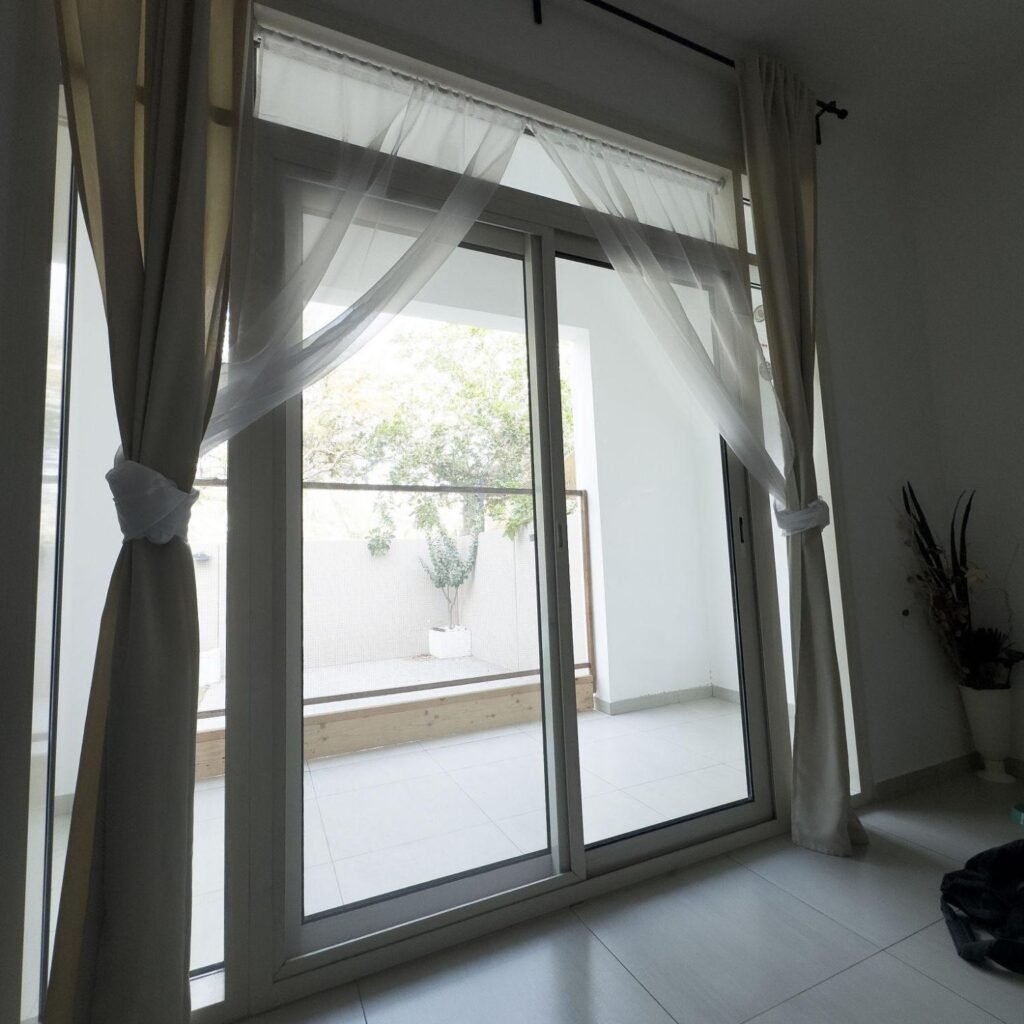
As the UAE transitions out of winter, many residents wake up to an unexpected sight—moisture forming on their windows early in the morning. While it may seem harmless, this is a clear sign of rising indoor humidity levels, a common seasonal shift across cities like Dubai, Abu Dhabi, and Sharjah.
This phenomenon is caused by warm, moisture-heavy air coming into contact with cooler glass surfaces overnight. As temperatures drop slightly during the night and early morning hours, the excess moisture in the air condenses into visible water droplets. While it may feel like a minor inconvenience, this is often the first warning sign that humidity levels inside your home are higher than they should be.
The physics is simple. Air at 24 °C and 60 % relative humidity has a dew point of about 16 °C, so any surface colder than that – glass cooled by the AC on the inside, or by the night air outside – collects condensation. Lower the indoor humidity to 50 % and the dew point falls to about 13 °C: the same window stays dry. Controlling humidity, not just temperature, is what removes the problem.
In the UAE, humidity levels begin to rise significantly as winter fades, especially in coastal regions. When this moisture becomes trapped indoors, it creates an environment where damage can quietly build over time.
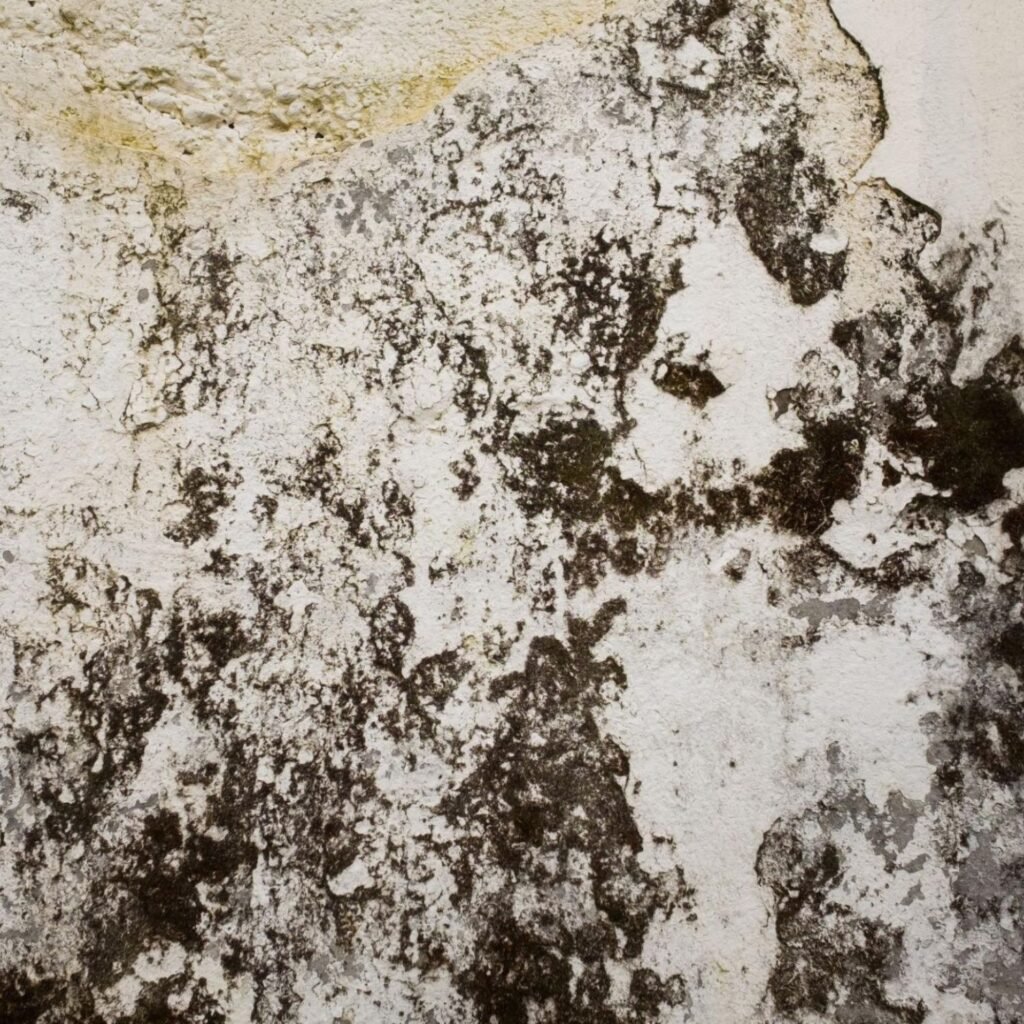
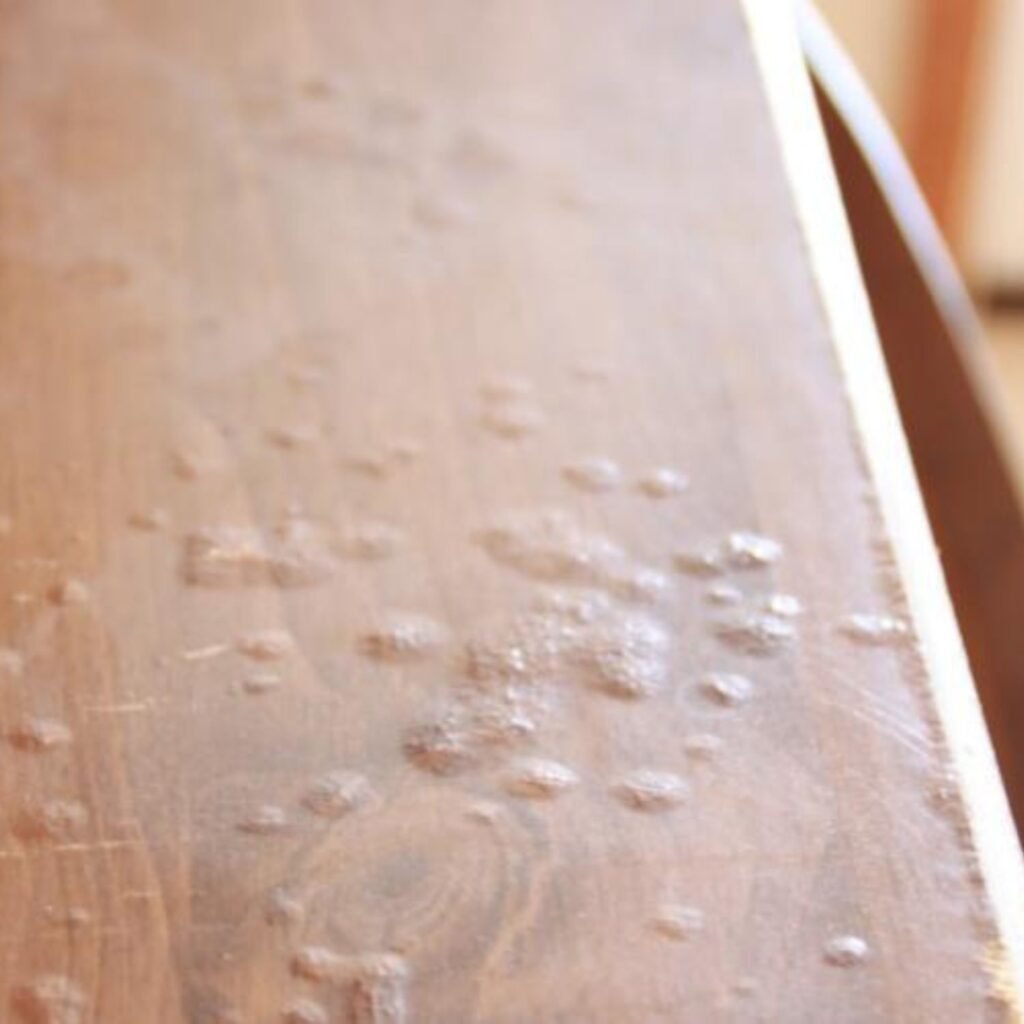
Excess humidity doesn’t just stay in the air—it settles into your walls, furniture, wardrobes, and even your flooring. Over time, this can lead to warped wood, peeling paint, and a persistent musty smell that’s difficult to eliminate. More importantly, it creates the perfect conditions for mold, fungus, and dust mites to thrive.
Health authorities such as the US EPA associate damp indoor environments with respiratory symptoms and recommend keeping indoor humidity below 60 %, ideally 30–50 % (EPA guidance). For families, that makes controlling indoor humidity a sensible priority rather than a luxury.
The UAE’s unique climate plays a major role in this issue. As temperatures begin to rise, the air naturally holds more moisture. Combined with tightly sealed indoor environments and heavy reliance on air conditioning, humidity often becomes trapped inside rather than ventilated out.
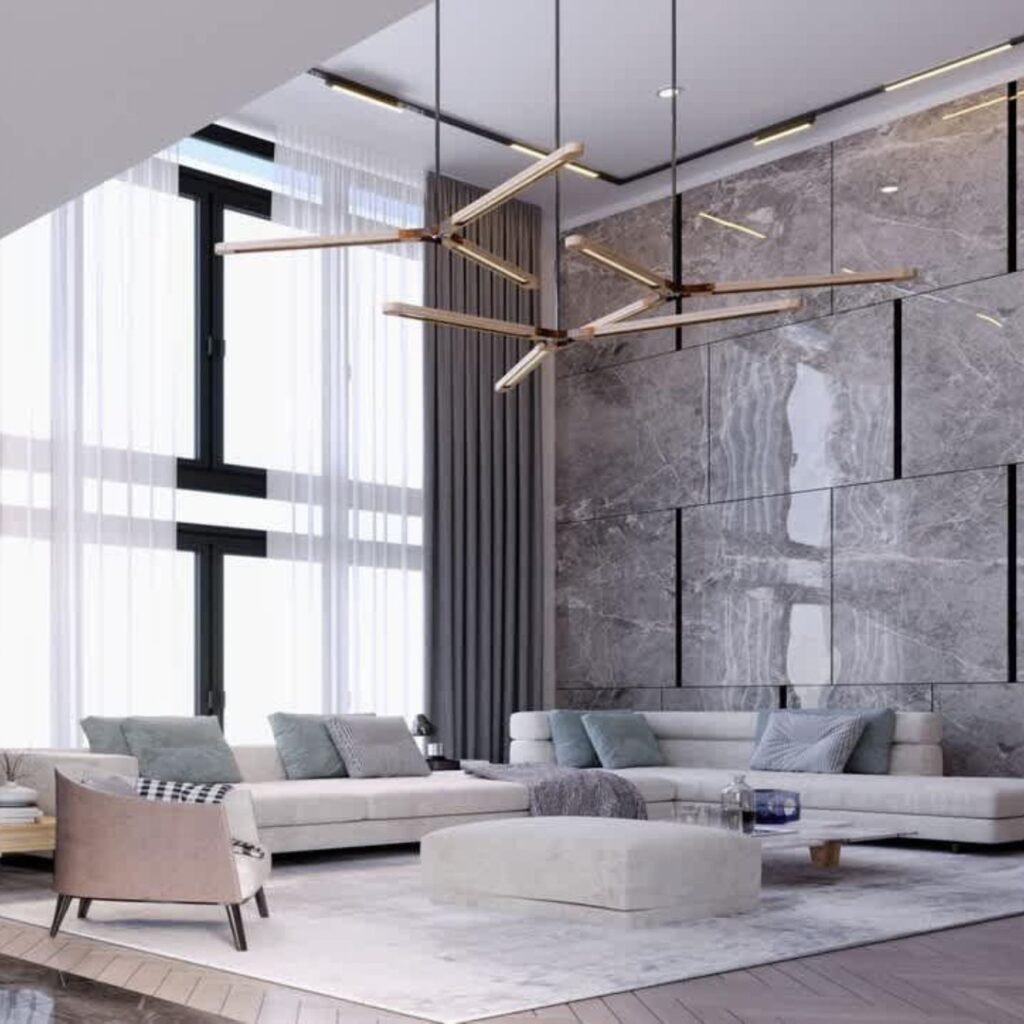
Large villas and open-plan living spaces—common across the UAE—can make this even more noticeable. The bigger the space, the harder it becomes to maintain balanced humidity levels without the right solution in place.
The key to protecting your home and health is maintaining balanced indoor humidity—and this is where a dedicated dehumidifier makes all the difference.
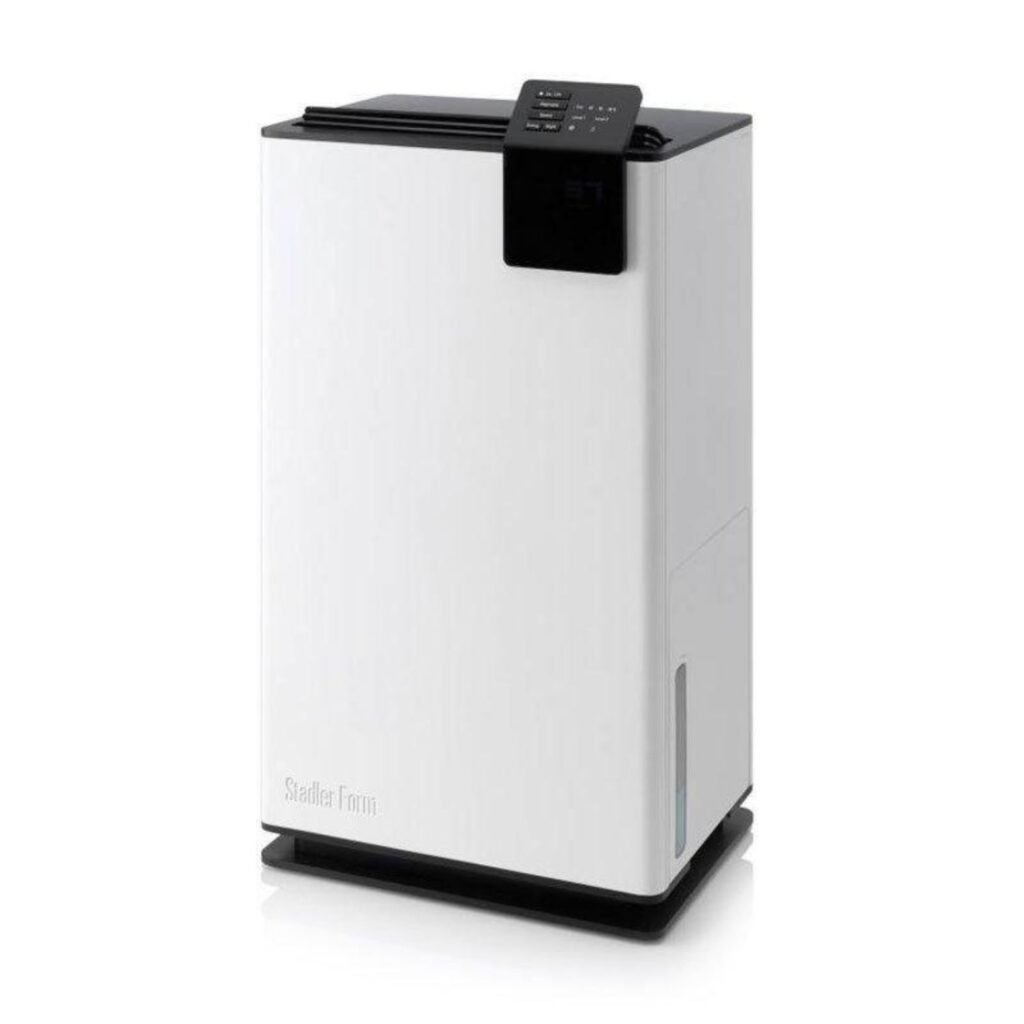
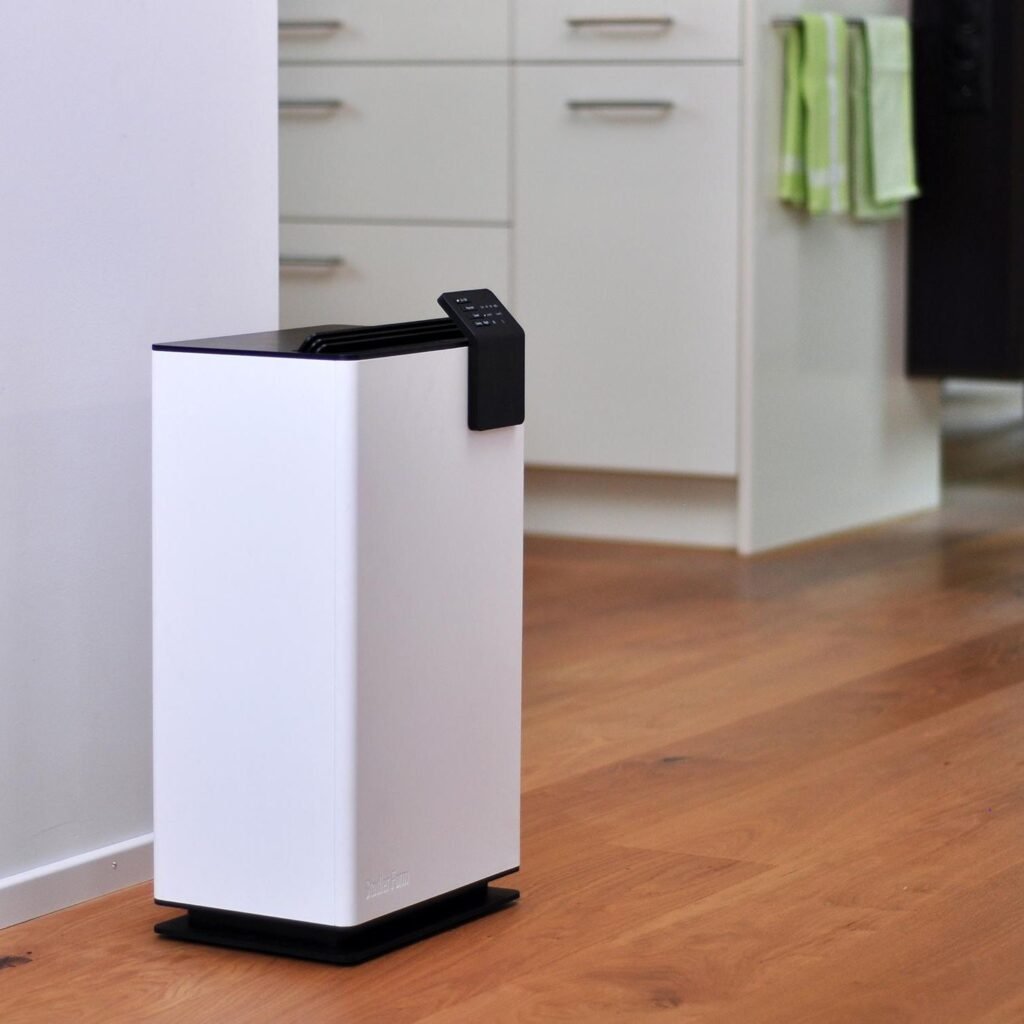
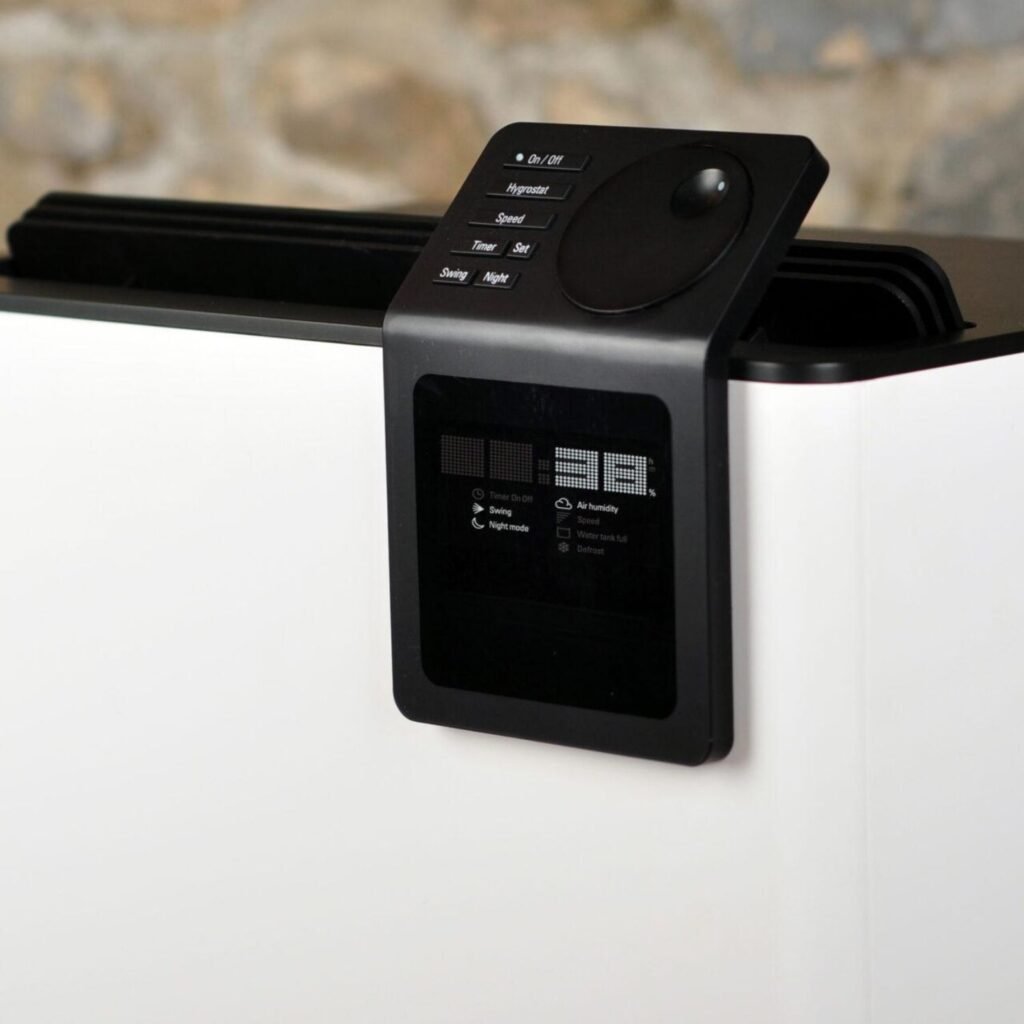
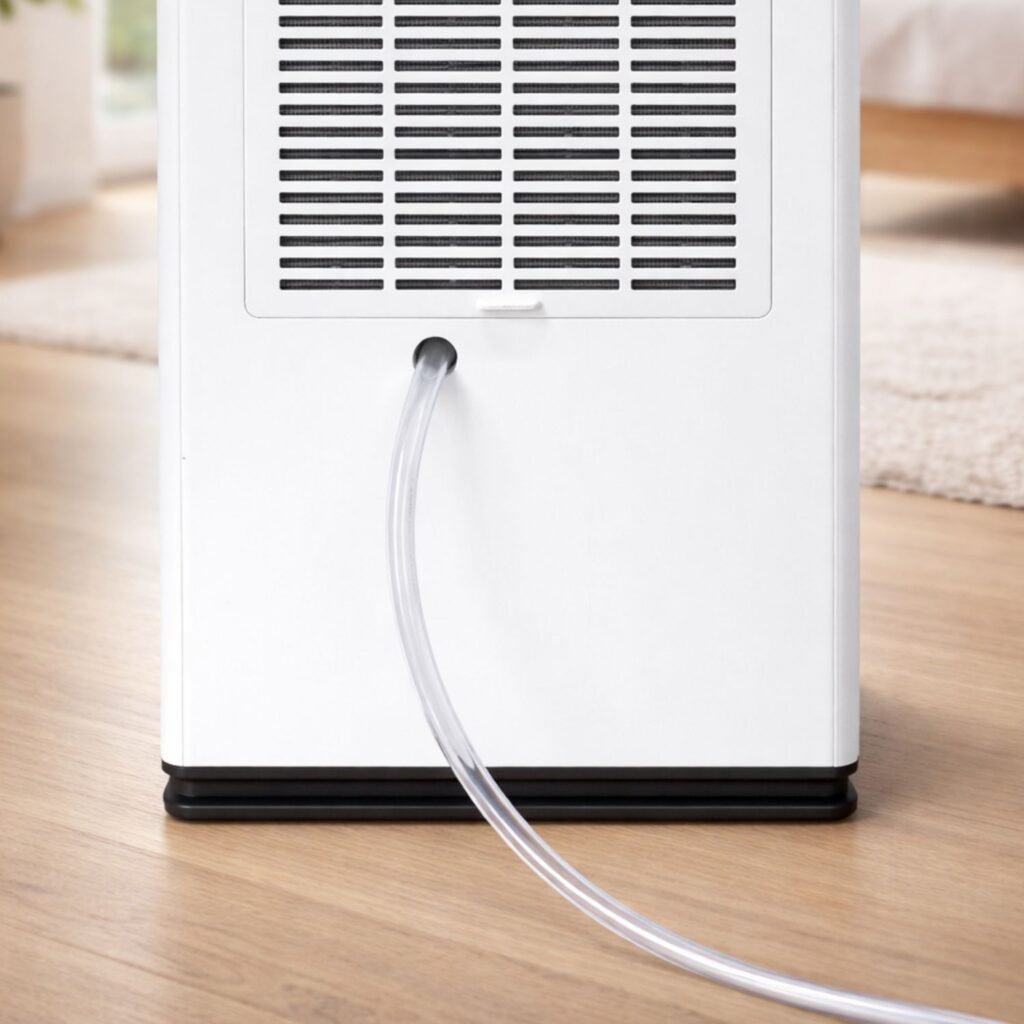
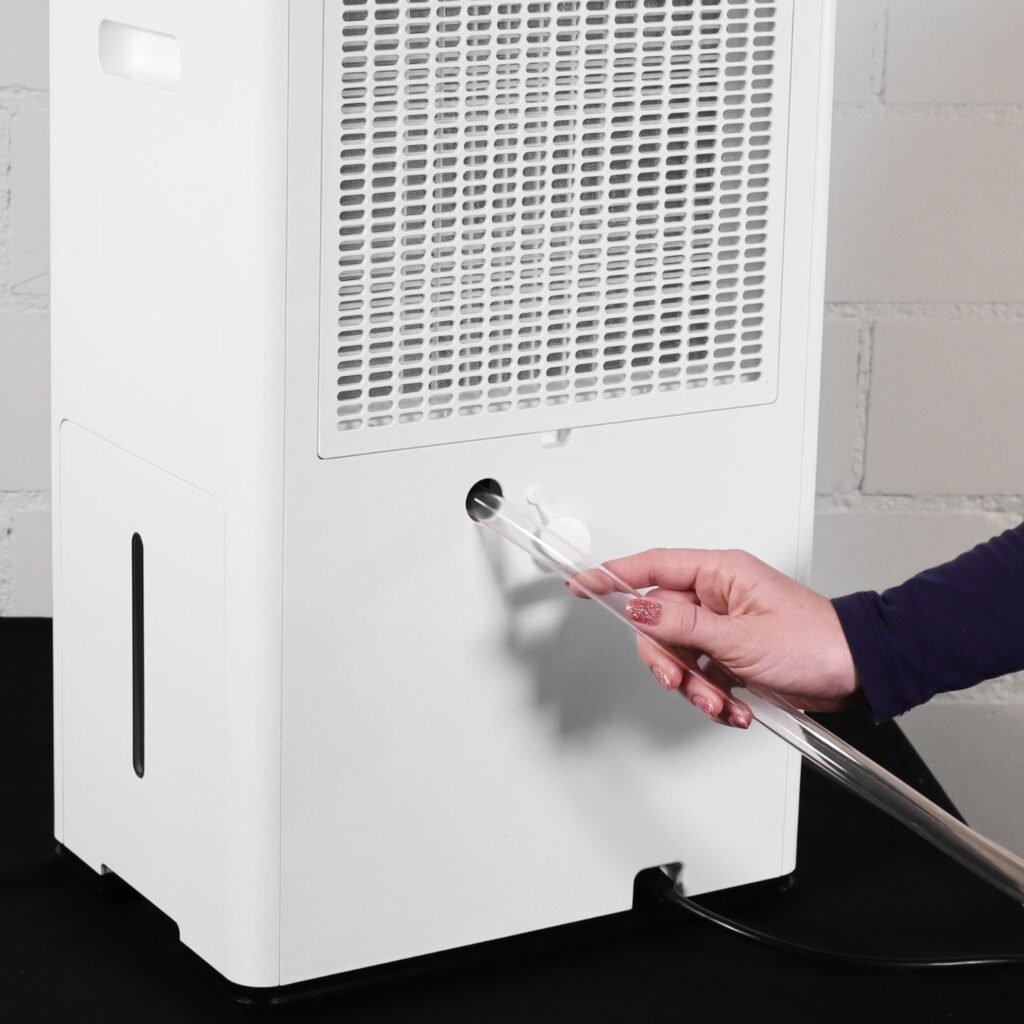
The Stadler Form Albert Dehumidifier is specifically designed for larger spaces such as villas, living rooms, and open-plan interiors. Built with Swiss precision and an elegant design, it not only blends seamlessly into modern homes but also delivers powerful performance where it matters most.
A dehumidifier with a hygrostat removes excess moisture and holds the room below the dew point of your windows, so condensation stops forming and the conditions that favour mould are reduced. Instead of reacting to the effects of humidity after damage appears, it allows you to control your environment proactively.
As the UAE moves into its more humid months, this isn’t just about comfort—it’s about protecting your space and your belongings.
That thin layer of moisture on your window in the morning might seem minor, but it’s often the first indication of a much bigger issue developing inside your home. Addressing it early can save you from long-term damage and keep the home comfortable.
With a right-sized dehumidifier in place, indoor humidity stays in range no matter how high it rises outside – and the windows stay dry.
Because humid indoor air touches glass that is colder than its dew point. At 24 °C and 60 % relative humidity the dew point is about 16 °C, so AC-cooled glass, or glass cooled by the night air, collects water. It is a sign that indoor humidity is higher than it should be.
It depends on how cold the glass gets, but keeping indoor relative humidity below 60 %, ideally 30–50 % as the US EPA recommends, prevents condensation on windows in most UAE homes. Lowering 24 °C air from 60 % to 50 % humidity drops its dew point from about 16 °C to about 13 °C.
Any unit with a hygrostat sized for the room: Stadler Form Albert (20 L/day, up to 70 m², quietest) for bedrooms and living rooms, Lukas (20 L/day, Wi-Fi) for apartments, and Lukas Pro (rated up to 50 L/day, up to 175 m²) for large open-plan areas and villa floors.
WhatsApp us