
Office Dehumidifier UAE: Choosing the Right Model for Large and Small Offices


For a large or open-plan office in the UAE, the Stadler Form Lukas Pro is the strongest option in our range: rated extraction up to 50 litres a day, dehumidification coverage up to 175 m², a HEPA H11 filter for dust and a night mode from 38 dB(A). For a smaller office, a meeting room or a manager’s office, a 20-litre unit is the better fit – Stadler Form Lukas if you want Wi-Fi control, or Stadler Form Albert if quiet operation (33–44 dB(A)) matters most. This article explains how humidity builds up in UAE offices, how to measure it and how to size a dehumidifier for each zone.
Measure first. Office humidity varies by floor, orientation and how often doors open. A hygrometer reading that stays above 60 % relative humidity indicates excess moisture; the US EPA recommends staying below 60 %, ideally between 30 and 50 % (EPA guidance). Heavily cooled offices can also be too dry, in which case a humidifier – not a dehumidifier – is the right device.
Why UAE offices get humid even with central cooling

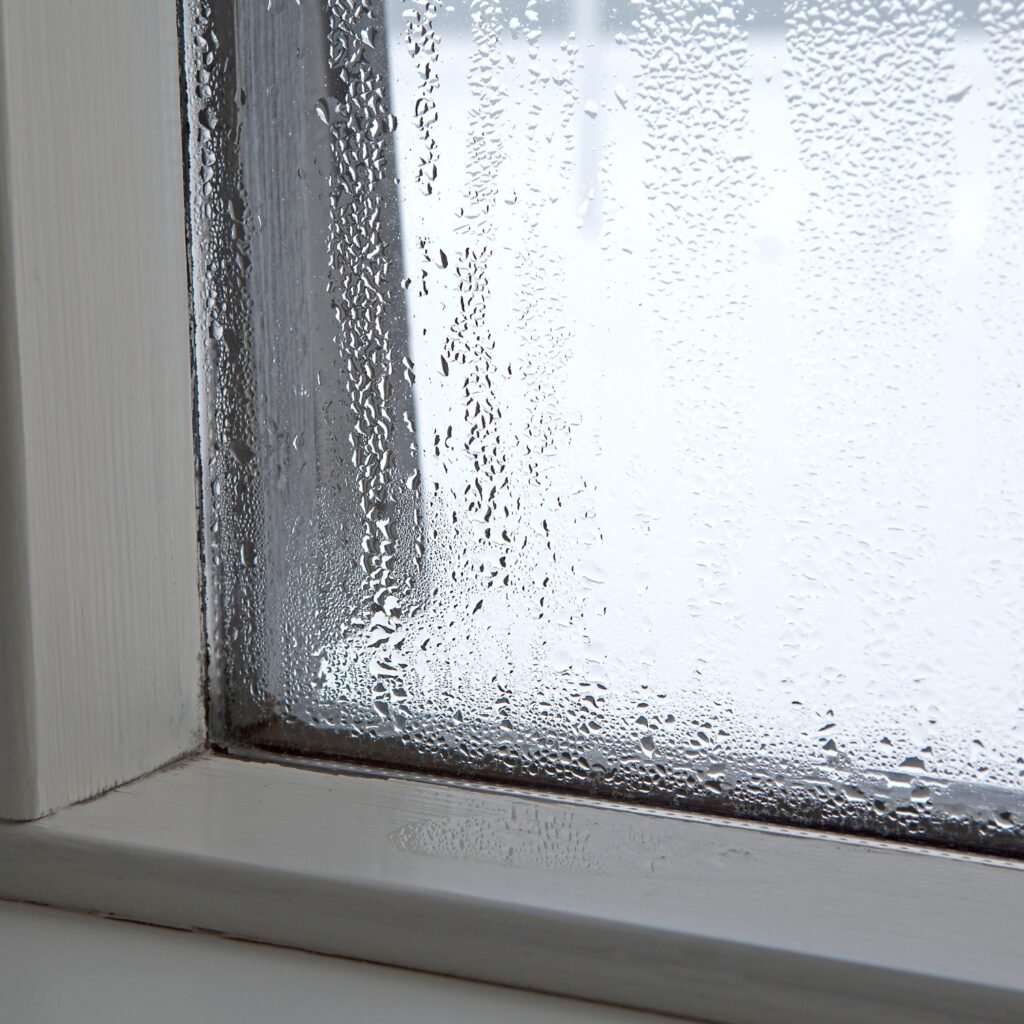
Air conditioning can remove moisture as part of the cooling process, but it may not maintain the desired indoor relative humidity under every operating condition. In an office the load is constant: main doors opening onto humid outdoor air, meeting rooms full of people, pantries and kitchenettes, fresh-air ventilation, and cooling systems that reach their set temperature and cycle off before they have removed much moisture.
Coastal business districts – Dubai Marina, Business Bay, Abu Dhabi’s Corniche – see outdoor humidity above 80 % for much of the summer, so the air coming in carries a lot of water. Ground-floor units, basements and storage rooms with little airflow hold onto it.
The result is familiar to facilities managers: a cold office that still feels close by mid-afternoon, a musty smell in the storage room, condensation around supply vents and paperwork that curls.
What high humidity does to an office

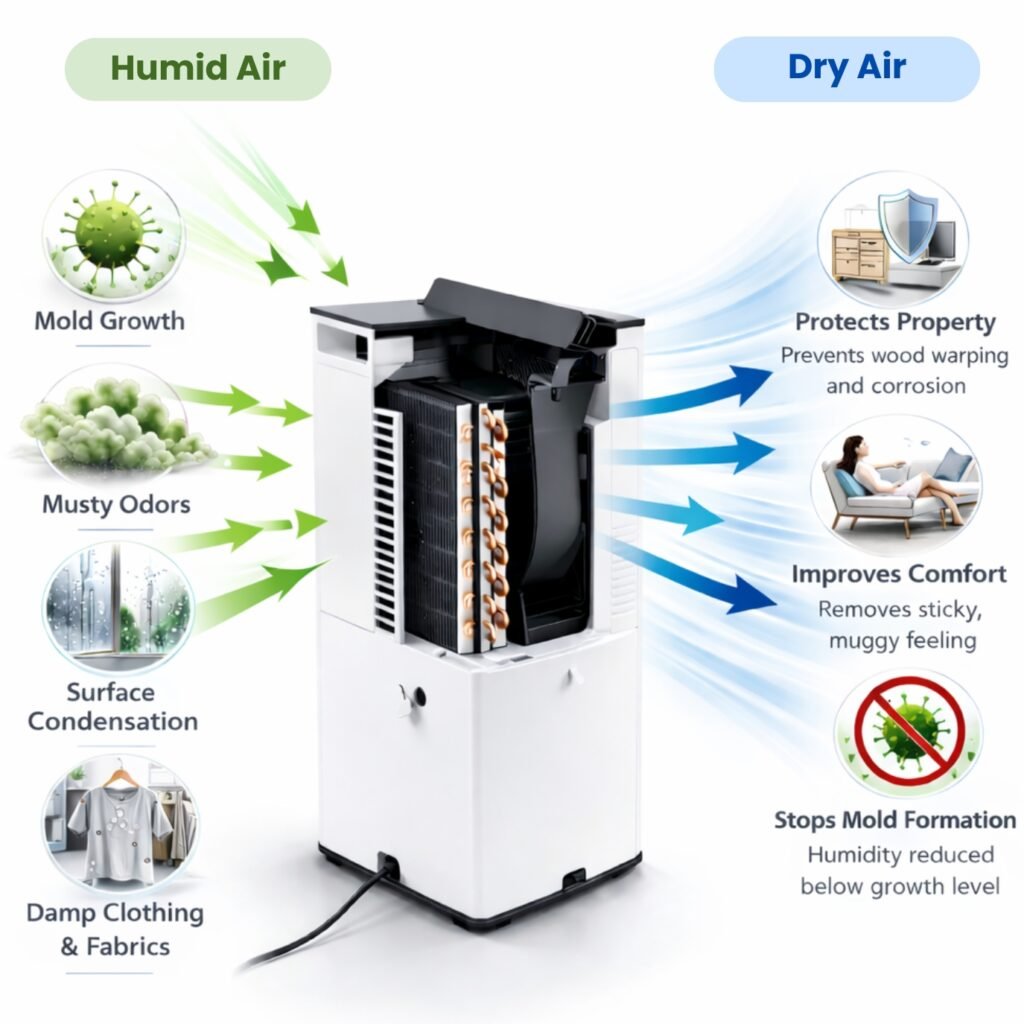
Comfort comes first. Humid air feels warmer and heavier than dry air at the same temperature, so staff turn the cooling down further, which costs energy without fixing the cause. Keeping humidity in range can support a more comfortable indoor environment at a normal thermostat setting.
Paper, packaging and archives absorb moisture, curl and stick. Electronics and metal fittings corrode faster. Wooden furniture and doors swell.
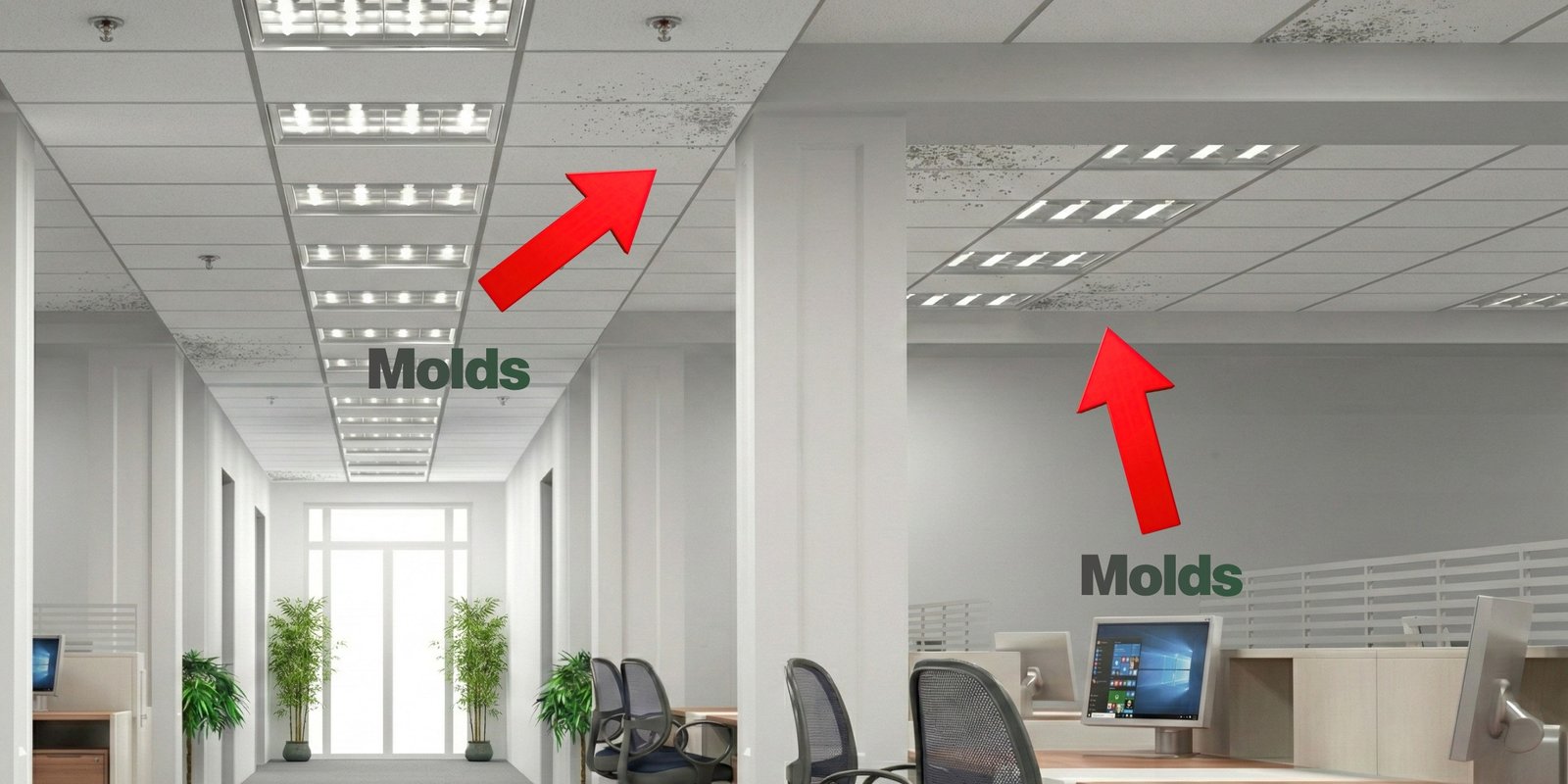
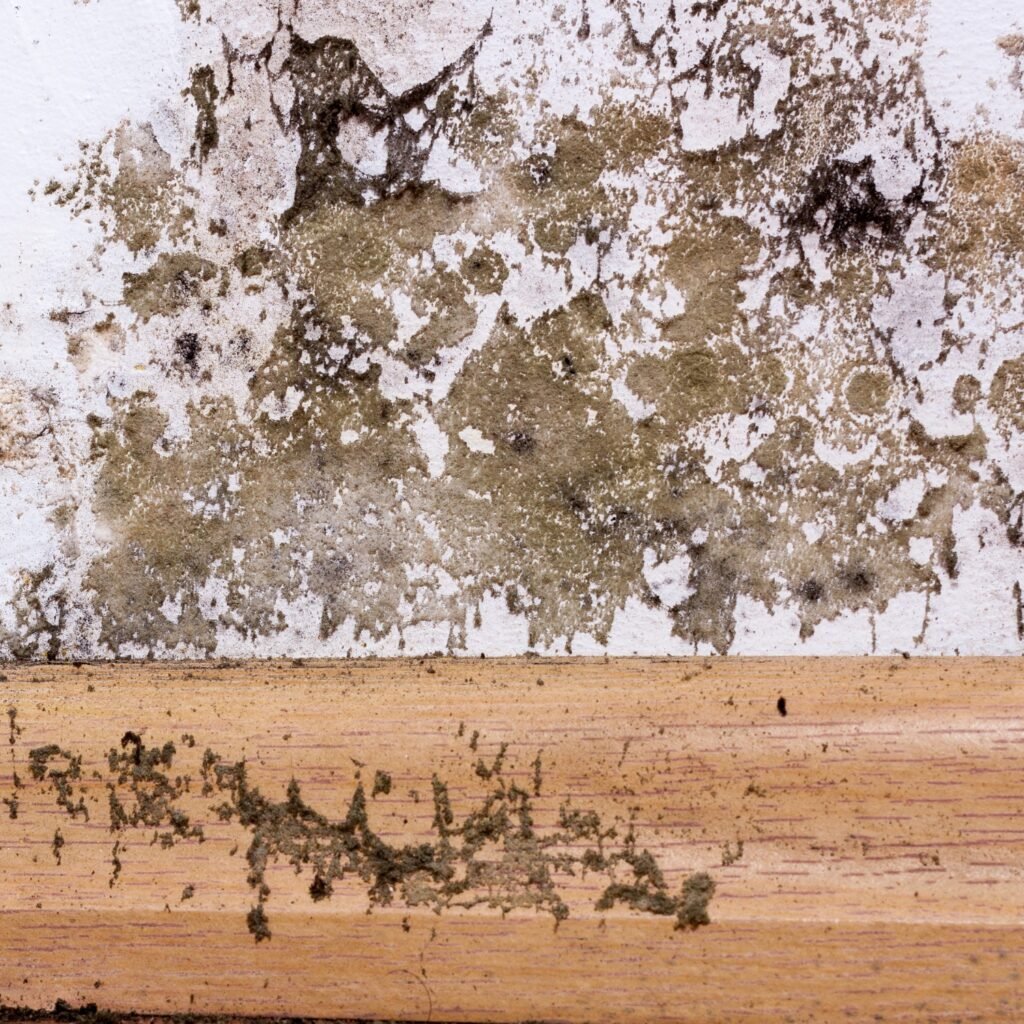
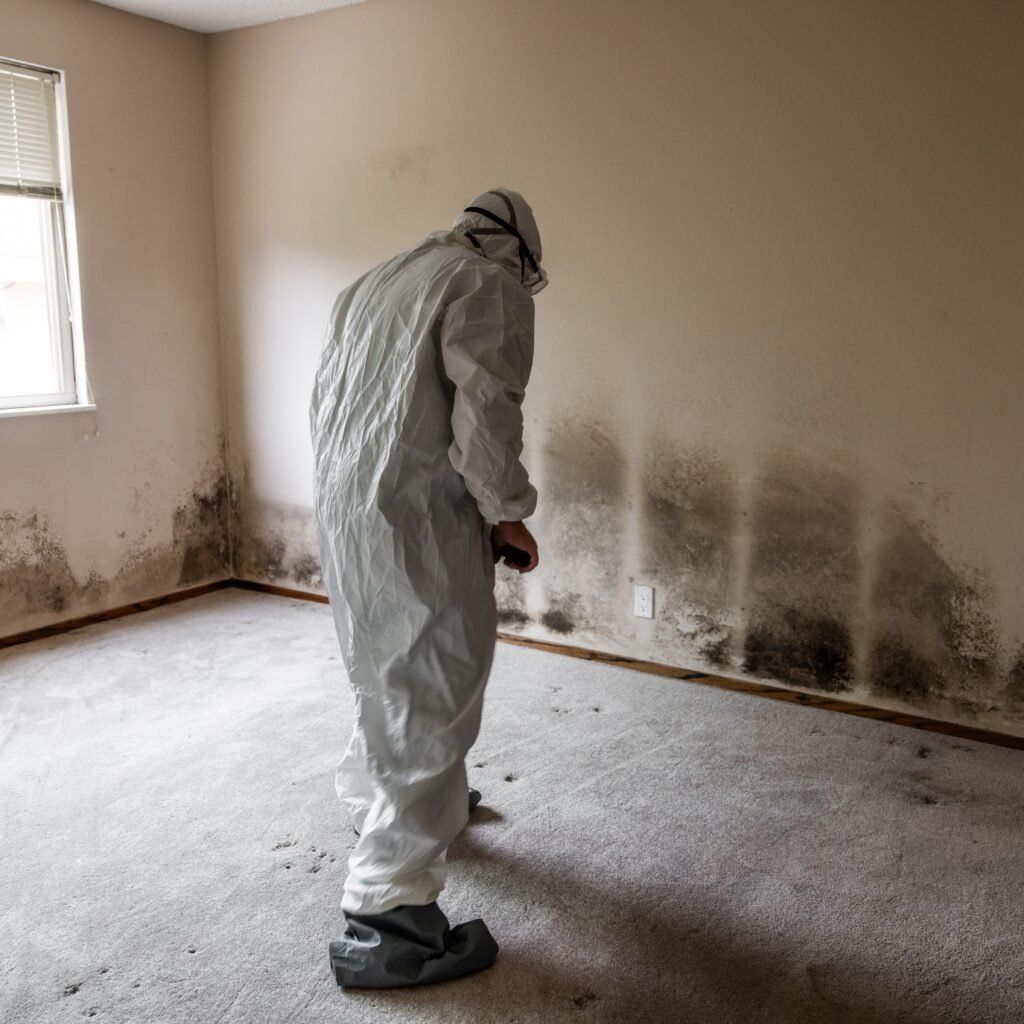
Higher indoor humidity increases the likelihood of mould growth in hidden places – behind cabinets, in ceiling voids and around AC vents – which is where the musty smell comes from. Controlling excess moisture helps reduce the conditions mould needs; it does not remove mould that is already there, which needs cleaning and a fix for its source.
Health authorities associate damp indoor environments with respiratory symptoms. A dehumidifier is a humidity-management appliance rather than a health product, but keeping the office in the recommended range removes one avoidable irritant from the workplace.
Sizing a dehumidifier for an office: zones, not buildings


No single portable dehumidifier treats a whole building. Work zone by zone and start from the manufacturer’s rated room size: a 20-litre-class unit is rated for up to 70 m², a 50-litre-class unit for up to 175 m². An open-plan floor of 100–175 m² is one zone and needs the 50-litre class; a 40 m² manager’s office or boardroom is a 20-litre zone; a row of closed rooms needs one unit per room or per connected pair.
Add the load. A storage room full of paper, a pantry, a ground-floor reception with a busy door or a coastal facade all push a zone up a class.
Then consider noise. In an occupied room compare the unit’s lowest setting, not its maximum: around 40 dB(A) or below is quiet enough to run during meetings. In a storage room or archive, noise barely matters and continuous drainage matters a great deal.
Large or open-plan office: Stadler Form Lukas Pro
For the open-plan floor, a large reception or showroom, or a training room, Lukas Pro is our strongest Stadler Form option. Rated extraction is up to 50 litres a day (a maximum measured under specified test conditions – in a cooled office it extracts less, but far more than a 20-litre unit), coverage is 175 m² (435 m³), and the swing function moves dry air across the room.
It is also an air purifier: the HEPA H11 filter delivers 327 CADR and the particle sensor shows air quality in real time – useful in dusty offices near construction or on lower floors. Wi-Fi and the Stadler Form app let a facilities manager check humidity and adjust the unit from anywhere; the digital hygrostat holds the target level automatically.
For unattended operation, connect the included hose for continuous drainage instead of emptying the 5.2-litre tank. Night mode runs from 38 dB(A). Lukas Pro carries a five-year Pro Series warranty, supported by Stadler Form UAE’s own service centre.
Smaller offices and meeting rooms: Stadler Form Lukas or Albert
In a manager’s office, a boardroom or a small shared office up to 70 m², a 20-litre unit is the right size. Lukas (20 L/day, 38–52 dB(A), 5.2-litre tank, hose included, 260 W) adds Wi-Fi control – convenient when the same person manages several rooms – and can be fitted with a compatible HEPA filter for particle filtration.
Albert (20 L/day, 33–44 dB(A), 4.6-litre tank, hose included, 270 W) is the quiet choice for a boardroom or an office where people are on calls all day: it holds a set humidity with its integrated hygrostat and needs no app.
Both are rated for rooms up to 70 m². If a meeting room is much bigger than that, or opens permanently onto the main floor, treat it as part of the large zone and size accordingly.
Recommended set-up by office type
- Open-plan floor, large reception or showroom (over 70 m²): Lukas Pro, on continuous drainage where a drain is available
- Boardroom or executive office where quiet matters: Albert
- Small shared office or meeting room, managed remotely: Lukas
- Storage room, archive or server room: Lukas or Albert with the drainage hose; Lukas Pro if the room is large
- Several closed rooms: one 20-litre unit per room or connected pair rather than one large unit in the corridor
Is Lukas Pro suitable for an office? Yes – it is the model we recommend for large and open-plan offices because of its 50 L/day rated capacity, 175 m² coverage, HEPA filtration and Wi-Fi control. For rooms up to 70 m² a 20-litre Lukas or Albert is the more appropriate size.
Stadler Form UAE’s engineers survey office spaces, recommend a unit per zone, install continuous drainage and follow up when filters are due. Call +971 4 343 5501 or see all dehumidifiers for UAE offices and homes.
Frequently asked questions
One rated for the whole connected floor. Stadler Form Lukas Pro is rated for rooms up to 175 m² (435 m³) with extraction up to 50 L/day, HEPA H11 filtration and a night mode from 38 dB(A) – the model we recommend for open-plan offices, large receptions and training rooms. Offices larger than 175 m² need one unit per zone.
Stadler Form Albert, at 33–44 dB(A) with a night mode, is the quietest in the range and holds a set humidity with its integrated hygrostat – suited to boardrooms and executive offices up to 70 m² where people are on calls all day.
Yes, when used as the manual specifies: connect the included drainage hose to a floor drain so the tank never fills, set the hygrostat, and place the unit on a level surface with clearance around it. Lukas and Lukas Pro add Wi-Fi monitoring so facilities staff can check humidity remotely.